
Work Text:
Though the demand of the Untheileneise Court's piercing bells had been his call to wake since he was thirteen, he still used to find himself in the Meir often enough that he could continue to count the picempee as routine also. Now it sounded novel, and he reflected as a stranger anew that it was a sweet sound. Each pastoral note was wont to end, but it intended not to encroach; it only lingered so the waker could cling to it, bask in it as it tiptoed gently away into the morning and the sleepy eye followed it there, tone by tone. It was a caress for the dawning day instead of an incitement of it.
Csevet had a reputation like the bells; those at court would not think him attuned as a babe to something softer and older. But no—very few of them would know the picempee at all. If he was like the bells, it was with purpose, unlike them who had never known anything but the bells.
Roya was tucked warmly into his side, but had been awake for far longer. "Joyous Csevet," he greeted, his eyes alert and twinkling. It was startling to see him in light. He was taller than Csevet remembered, and his hair had already started to grow out, on its way to the traditional man's length. "Art tired?"
Csevet had travelled for days before arriving at the Meir the previous night, but for Roya's sake he denied the obvious answer. Roya pumped his fist in excitement. He wanted to take him kite-fighting with his friends, and did not manage to be quite opaque about it. Some of these friends Csevet had already caught glimpses of, a column of curious round faces peeking around the doorframe when he settled his horse in the stables upon his entrance. Little Hireno and Ashkava he had known since they were infants, since before he left for Cetho. The last face was new. It was her Roya seemed particularly anxious to display to Csevet.
Isabon Meir was built into cascades, scattered on wide horizontal scars in the rock. Slanted strata formed the bases of streets and quarters between which rope bridges wove like spiderwebs. Their home sat atop one of the highest layers, jutting singularly from the mountain to overlook the more densely packed huts and knitted streets below. He stepped out to the sloping veranda and reveled in the breath that rejuvenated the parts of his lungs he felt numbed in Cetho.
Csevet had tried to capture Makhero in paint many times. He was fine with textures and his composition was passable, but it was the hue that would not come. It looked like it had bled. An infection had been drained from it and left it unsaturated, relieved. The bloodless blue stretched for miles from which life sung in afterglow. Serene, maybe, should have been the word, but that word had been taken.
Belatedly opening his eyes, he saw his grandmother watching him with a smile. She stood on the bottom of the steps to the entryway, tugging gardening gloves from her knobbed fingers.
"Joyous maman," Csevet said, and bowed instinctively in a gesture that he realized, as he was doing it, was out of place. She gracefully planted a kiss on his crown.
It was not sudden; it had been building conspicuously for days as the air around him became more and more familiar, but it crested with a force that would have put him on his knees had he not had the door to cling to. He wanted to weep with it. Home, cherished poison of the heart.
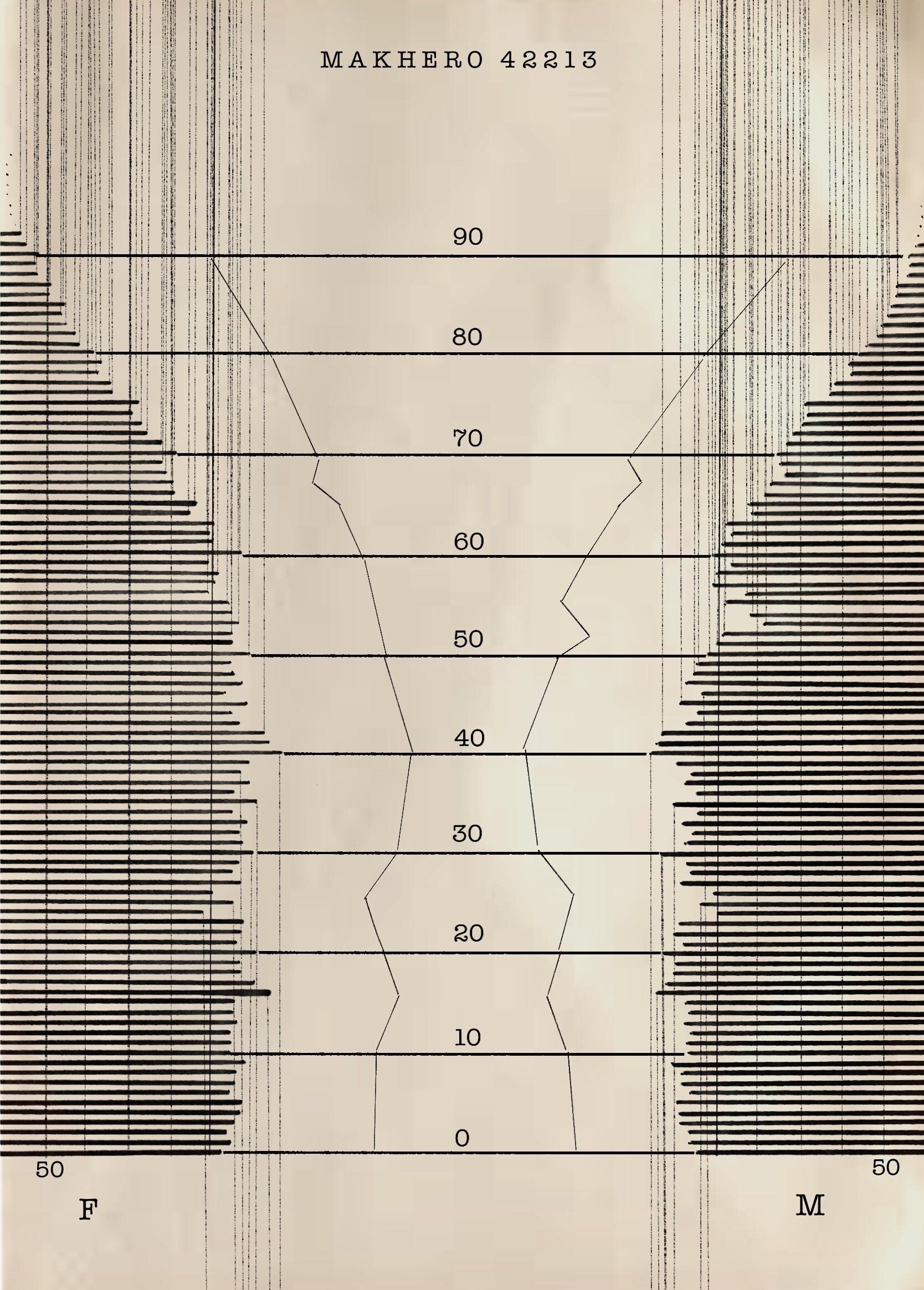
The census was old and hardly accurate in the first place, Csevet knew, but he was limited by access.
The populations of major centres were more meticulously documented using mailing addresses, a mandatory form for each inhabiting family. Outside of those, in the vast swaths of land that made up the Ethuveraz, they were dependent on local prelacies and nearby couriers to compile information.
Most of the information he could see was most probably from a registry at a community center like a temple or a post office. Because many were not literate or not willing, the census forms were filled by clerks who handled it based on outwardly visible characteristics.
He dusted off a folder and began to leaf through it.
His bags lay strewn open on the bed-hammock that had been set up for him. Roya sifted through the spoils in perplexity. "Thou hast no clothes!"
"These are considered fine clothes," Csevet objected.
"Fabric this thin? Thou must joke. Where art thy leathers? Surely they haven't changed the courier dress to this?"
It seemed a task to explain that they had not; he merely did not frequent the courier dress any longer. Instead of trying, Csevet made himself busy pulling out his old trunk for too-short breeches.
Isabon Meir had a dignified people. There were ample walkways and lifts through each layer of the village to avoid rock and dirt without requiring a lady's long skirts to spread wider than her shoulder-width. But Roya needed to go where the wind blew, so Csevet overlaid his exposed shin with leather boots and pulled a shawl over his thinner shirt. The rigging farther up the cliffsides, above the Meir's architecture, would always scuff and catch.
When he was a child, he had climbed the same ropes like a monkey. Now he worried he could feel his joints straining. Perhaps just a temporary result of overuse from his journey, or a more insidious consequence of underuse from his months as a secretary. The thought made his last leaps a bit more daring, which turned into a slightly embarrassing spectacle when he noticed upon his flourished landing that Roya was waving his arms as if to present Csevet emerging from the inelegant cloud of dust. The half dozen youths Roya had gathered for the day's bout looked at him with big eyes and wondering faces. After spending so long in a court of almost invariably his seniors, he felt strange being the elder tag-along of the group, not to mention what stories Roya had probably embellished him with. The tips of his ears warming, he dusted off his clothes.
Csevet's kite was cut fourth, a respectable position to gain and then release to the michen. The kite of the girl he hadn't known, Voranvaru, fell almost immediately after, so soon that he suspected it was similarly deliberate, though he could not think why. With the speed at which she approached him as soon as she had reeled her string, he had something of a sense of being hunted by Csethiro after a meeting she did not have liberty to attend.
Roya had talked about her for half the path up, yet he did not adequately prepare Csevet. She must have been all of fourteen years old and the first thing she said to him was, "Art thou an imperialist?"
Csevet resisted the urge to laugh from pure surprise. At court they called him many things, but imperialist never figured into it—everyone in Cetho was an imperial loyalist.
"I work for the emperor's household," he said, smiling.
"Wilt take Roya there?"
Csevet tilted his head in puzzlement. "To Cetho?" Roya had never shown an interest in travel, and indeed, he looked quite content with the pleasures of home, still persisting with his kite, thrill plain on his upturned face.
To his bewilderment, she turned on him a fierce, accusatory glare.
Raising his eyebrows, he asked, "Does he want to visit?"
"Of course not!" Voranvaru, in an unsettling display from someone half his height and still lisping some of her consonants, glowered at him. He took a step back instinctively.
Csevet was beginning to wonder just how extremely Roya's feelings went unreciprocated when a shout rang across the clearing. A circle was congregating in the center and they ran to join it, finding Hireno doubled over herself in the grass.
"Let me see," Csevet said gently, laying a hand on her shoulder, but she only whimpered. He gestured for the group crowding her to step away so he could inspect without shadow, and knelt flat to the grass. Glinting glass revealed the manja string clinging to the arm she caged to her chest.
He took his knife from his pocket and cut the string where it connected to the kite, caught partly under her knee. Taking the end in his hand to make sure it would not again catch, he gingerly rolled Hireno onto her back.
"Roya," he said, making to look up, but found that his brother already crouching beside him, attentive. "We must break the loop. I'm going to hold the string between my hands. Saw the taut section very finely, with no force forward. Canst do that?"
When they had it slack, Csevet eased it from the cut it had dug into Hireno's skin and lifted it away. He tore a piece of cloth from the train of his shawl to stem the flow of blood and lifted her in his arms so he could make sure the wound was held fast.
He thought to make his way down the rigging, but a path had already been set by the line of youths striving forward into the mountainside trees. They ran not two minutes before they came upon a wooden dwelling erected off a gravelled goat-path, a fountain next to it.
Hireno cried out as the running water fell on her skin, but Csevet was relieved—the laceration itself was not deep, he could see now as the blood was washing away. "Hireno, canst move thy fingers? Like so? Aha, look at that, nothing to fret about," he said. She hid her face in his chest to look away from the diluted red running on the stone, and he obligingly carded his fingers through her hair. "You're just fine. What a brave little Min Nazhin."
"Why didst thou try to catch it?" one of the kids complained, ill-considered. Voranvaru rounded on him immediately. Csevet struggled to hold Hireno while trying to place himself in between the two. But he need not have bothered—as soon as the tension pitched, a pair of weathered gray hands grasped Voranvaru by the shoulders.
So severe was this man that Csevet would have leapt to wrestle the child from him, had he not caught sight of Roya first. His brother crouched into a low bow he had seen only in one setting previously, under a modern gaslight chandelier.
"What is this?" the man asked tightly.
"Our friend has an injury. We are only tending to it," Voranvaru said quickly. But when she made to gesture to Hireno, she jumped from her perch and ran from the clearing, along with, Csevet saw, most of the others. Voranvaru's face colored. "It's nothing."
The man made a disgruntled noise and turned on his heel, Voranvaru's arm still in his grasp. Csevet made to go after her, but Roya pulled him back.
Lord Hanshebar,
Your several letters touching upon the recent passage of migrants into your jurisdiction have been duly received and considered. We have been attentive to your apprehensions, and our prior conversations on this matter remain clearly in our mind.
We am fully prepared to extend such support as may be requisite for the maintenance of the region's good order. You have but to lay before our ministers the practical needs occasioned by these changes, and they shall be addressed with the proper diligence.
However, we must request that further petitions seeking reconsideration of the border policy for Makheron region itself be discontinued. You are well acquainted with the principles that guide our government in this affair. It is not our intention to impose restrictions upon the movement of peoples, nor to enact the measures you have urged along the Eastern front. Our position on this matter is settled, and further remonstrances will not alter it.
We trust in your continued loyalty and prudent governance.
Edrehasivar VII
Ethuverazhid Zhas
"What of her mother?" Csevet asked.
"It has only been her and her father, as long as anyone here has known. Since they came here."
He hummed. Steam rose around him, softening his voice.
"Does he approve?"
Roya's head snapped up. "What?"
"Of you two, does Mer Roseharad approve?"
"Well, we…" Roya dithered, his ears low and flattening over his waterlogged hair. "He is not the most…not the easiest."
"Thou hast learnt that bow. With thy your hands joined at your forehead."
"Oh. Yes. Voranvaru taught it to me. She says it is a particular gesture of respect where they come from."
Csevet sighed and laid his head back against the rocky ring around the water. His muscles felt loose and light in the hot water, like they were floating, and he wondered if the springs had always had that strong an effect or if it was the melting of some kind of stress condition he had been under.
His took out his braids one by one and comb his fingers through them, quiet and placid as Roya recollected all his wound up energy. He burst halfway through the third. "Dost thou approve?"
Csevet smiled at him, hoping his face was kind. He was on the habit of being composed in the face of stress more than anything. Measured reactions, professional gestures, and sometimes he thought his lips had stiffened somewhat beyond his reach. For his little brother he must be softer.
Roya looked at him with his forehead knitted, and the water dripping down his hairline and collecting his the hairs of his eyebrows into downturned bunches gave him the look of a wet dog. Csevet wished there was a simple answer. "She seems sweet. Protective of you."
"Oh, did she say something?" Roya worried. "She can be so forward."
"No, she was fine, nothing to worry about," Csevet said, and wrung his worry out with his fingers. "She did ask if I would take thee with me to Cetho. Why is that?"
Roya blew out a breath. "Nevermind it. She heard about thee—everyone speaks of thee—and she must be worrying maybe I will go too." He dipped his fingers through the water surface, idly making ripples. He turned his eyes down. "I will not."
Elves born Eastwards tended to have finer hair. Csevet often admired the stronger and wavier hair common in elves of central regions like Cetho, and, more than anything, the characteristic goblin curls. His own was plainly pin-straight, and the individual strands were so thin and fragile as to get easily tangled in themselves as well as irritatingly prone to breakage. He kept sober braids to corral them. But when he came home to Makheron region, and to the Meir, he enjoyed surrendering to the reality—and the benefit—that he was only the latest of generations that had accumulated ample time to master their features.
The traditional style was a bun that looked like an intricate rose on top of the head. It was less tight and austere than his braided buns, but required more time and effort than he had. The last time he would have worn it was perhaps more than two years ago. A ladder bun was also an option, or a long twisting style that cascaded down the back in a weave like a wicker basket, but for all the first step was an overnight hair oil.
He fell asleep at his grandmother's knee, to the gentle massage on his scalp and the melody of Roya practicing his lute. When he opened his eyes, the twilight windows had transitioned to firmly dark outside. Fingertips still ran through in his hair, slowly and aimlessly. He tilted his neck back. "Maman?"
"Yes, my dear."
"Thou shouldst sleep."
She said nothing for a long moment, then let his head rest against the mattress. She got to her feet gingerly, her legs creaking. "Csevet, come see us more often, won't you?"
"I will, Maman."

The emperor counted on his fingers. It was oddly endearing.
"Cetho, of course, Sevezho fairly often when we were a child—it was very near Isvaroë and our mother liked to make day trips there, and Csedo sometimes. Calestho four or five times a year, from Edonomee." He had a fifth finger wavering. "And perhaps we have stopped at Aveio, but we do not remember it well. Nothing compared to you."
Csevet smiled, in the increasingly frequent occasion he felt he could afford. The winter went on dense and sharp, but inside the Alcethmeret it was mellowing. "Only for work, Serenity. We could not go to sightsee."
"But sights you did see. We find ourselves very envious."
"The ethuveraz is beautiful. Many emperors travelled it frequently. Perhaps soon, when you are more established, more comfortable…"
"We should like it very much."
They sat around a large table fitted with a map, and more draped on the walls. The only surface not covered was the singular window which showed a dizzying view of the Court, far above every snowy treetop, making clear the tips of spires and domes. Csevet had made made use of this room many times, but Maia had never before seen it. Like so much about him, his wonder was rejuvenating.
He traced a finger past Ashedro, past Puzhvarno and Zhuro, across the Tetara and into the Eastern mountain ranges. "They are settling around here? How far away is that?"
Csevet looked around momentarily for an adjoining map, but the map master had left them to their own devices and it would take too long to dig for it. He placed his hand near the edge of the table and nudged the scale to Maia. Maia measured the scale's paces across the map and concluded, "Very, then. They travelled a lot to come to Makhero."
Csevet nodded, concurring.
"May we ask a somewhat personal question? You have no obligation to answer."
"Of course, Serenity."
"You mentioned you were born in these mountains. Why did you come to Cetho?"
Csevet cocked his head. "We think these migrants must have very different reasons to travel to the Ethuveraz than we had to travel to Cetho."
Maia seemed to take that as an answer, but from the fidgeting of his fingers over the map, it was apparent he was still contemplating. He said, eventually, with artificial mildness, "We have an independent interest in hearing both."
A heating lamp burned incandescently behind Maia and outlined him in a soft orange hue. His eyes were downturned, gentle. He tried so very much not to intrude, Csevet thought. "Makheron is mostly villages. In a city like Cetho or Zhaö, so many people congregate that there is a certain anonymity, a greater freedom of…association, ideas. Makheron is made of smaller segments, with people more visible to each other, and is much more traditional."
"And you are not traditional?"
"In some ways."
Maia nodded thoughtfully. "It can be inhospitable. It demands conformity."
"Yes, Serenity."
Mer Aisava,
Thank you for your note. We have searched, but we cannot see why there would be such a flow of migrants from Barizhan so particularly in that area. We cannot account for it in our own records. If we can aid you in any other way throughout the course of your inquiry, you need only ask.
Please keep us appraised.
Vorzhis Gormened,
Ambassador of the Great Avar to the court of the Emperor of the Ethuveraz
No one answered the first few times he knocked. The moon hung bright and full above him, but its light barely penetrated the thick canopy of the woods. He pushed away his trepidation. "We would be ever in your debt if we could speak to you now, Mer Roseharad. We are Roya's elder brother, and we ask for your aid."
The door cracked open, to his profound gratitude. Mer Roseharad did not want to receive it. He turned away from him and walked to his kitchen, stirring the pot he had been engaged with. Csevet knelt in the doorway.
"We intend no harm. We want to assure you we respect your privacy to the fullest extent, and never would we do anything to jeopardize it, Mer Roseharad. We only want to ask—we must ask—about the health of our grandmother."
Mer Roseharad gave no indication that this meant anything to him save for a slight tightening of the shoulders.
Csevet continued, "Voranvaru asked us if we would take Roya to Cetho, and from that we worry. We worry that it may be an implication, some knowledge she has, something she has detected, that our grandmother may not be able to care for him. Is she ill?"
He turned, the spatchula held tightly in his grasp. "Why," he asked, his voice a deep rumble, "would you think that we know anything of the matter?"
Maia was not surprised to find that Csevet knew the way to the Danivadeise apartments, although he supposes he should have been. But Csevet knew everything, and Maia was profoundly grateful for it.
Before they climbed the steps up to the door, the air was heavy with a sweet aroma that spilled through the material. Maia blinked, taken aback by its strength.
"It helps with brainstorms, Serenity," Csevet explained. "It is Celvazeize medicine. A root that is meant to be burnt and inhaled for well-being."
"We have not encountered it before."
"It can be difficult to procure. We expect Osmin Danivin has hired a Celvazeize healer, to have it available."
Maia thought back to when he had previously visited, but remembered only a short goblin nursemaid at the foot of the bed. "Why is that?"
"They are experts in the area, Serenity. Not all of their medicine is effective on others, but they are skilled in caring for what we would see as ailments of age."
"There is a reason this border has in the past been so strict, why we kept so apart—it is difficult for our peoples to mix when our lives go so differently. It is a challenge generations past have not endeavoured to take on," Mer Rosharad mused, his beard curling behind the haze of steam form his mug.
"We struggle to imagine how they could, with such different lifespans in one society."
Mer Roseharad raises his eyebrows. "Those two are only young. You need not worry about the eventuality of ages for them just yet. Let them play it out.”
Csevet frowned uncertainly and stirred his cup. The tea was an unfamiliar blend. Csevet had been drinking milked tea since he was a child, such was the fashion in the East, but the frothiness and earthen taste was new to him. "What is Celvaz like? You must miss it."
"Like nowhere else. You Ethuverazeize think your cities are cities—we see how they speak of them here, the great Amalo, Cetho. Bah! Celvazeize cities put them all to shame. For the past few years we had settled in Volekhva—where Voranvaru was born—which is larger than two of your Cethos, but is considered only a small town for us. Before that, we worked in Fira, the capital. We have seem buildings taller than these mountains, crystal-lit, built for strength. Tasted spices from far beyond the Chadeven sea stocking our bazaars. Things you can barely catch glimpses of here."
"We should like to see it, some day."
"You would be one of the first elves to, if you do," Mer Roseharad said, not unkindly. "Perhaps you will. Times are changing, our borders are blending. With all that is happening in Celvaz, families have taked root here, and if there is one thing we have, it is large families. You are assured many more newcomers. We are not so good at hiding—you have already noticed us, and we cannot think others will be too far behind."
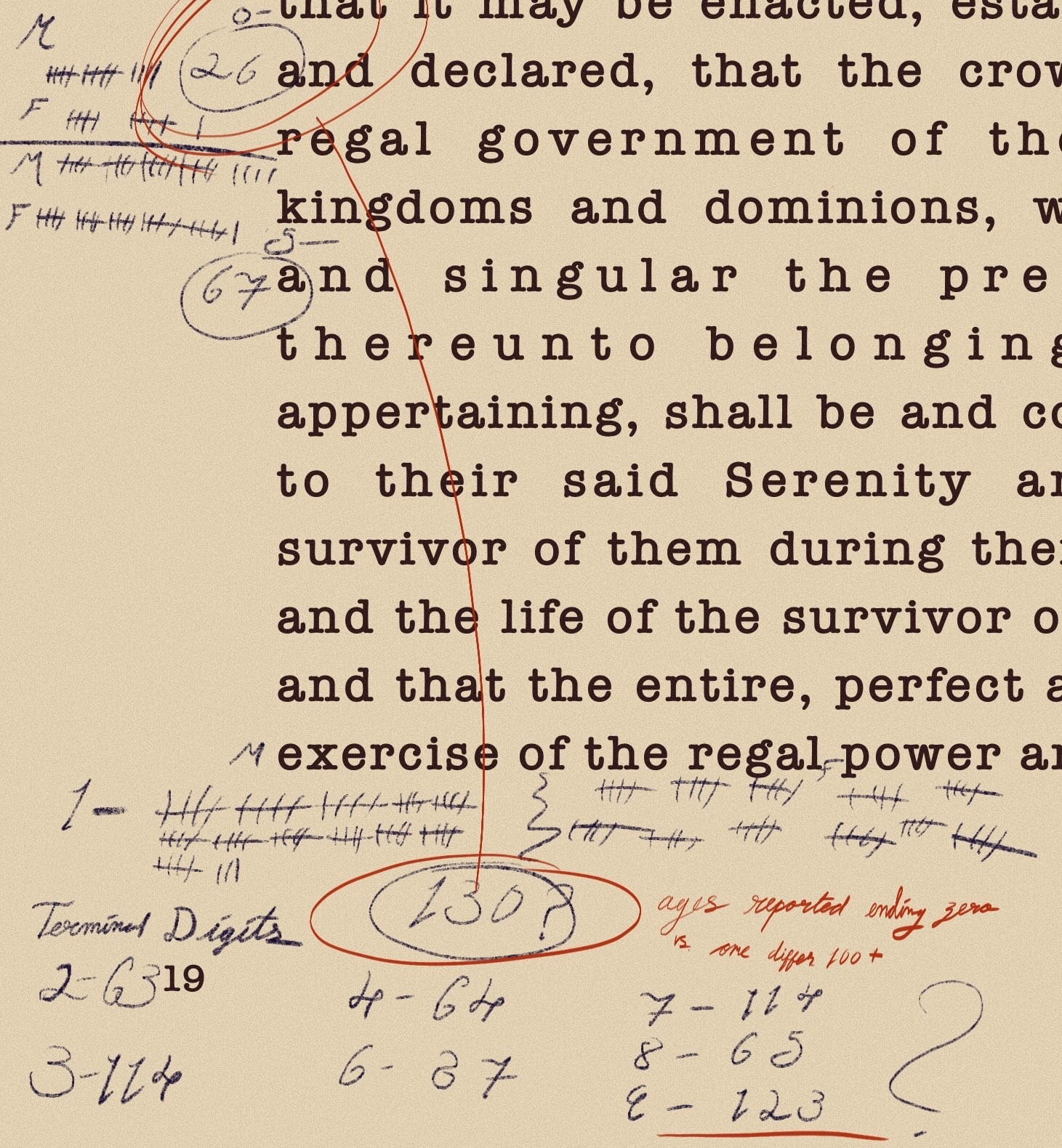
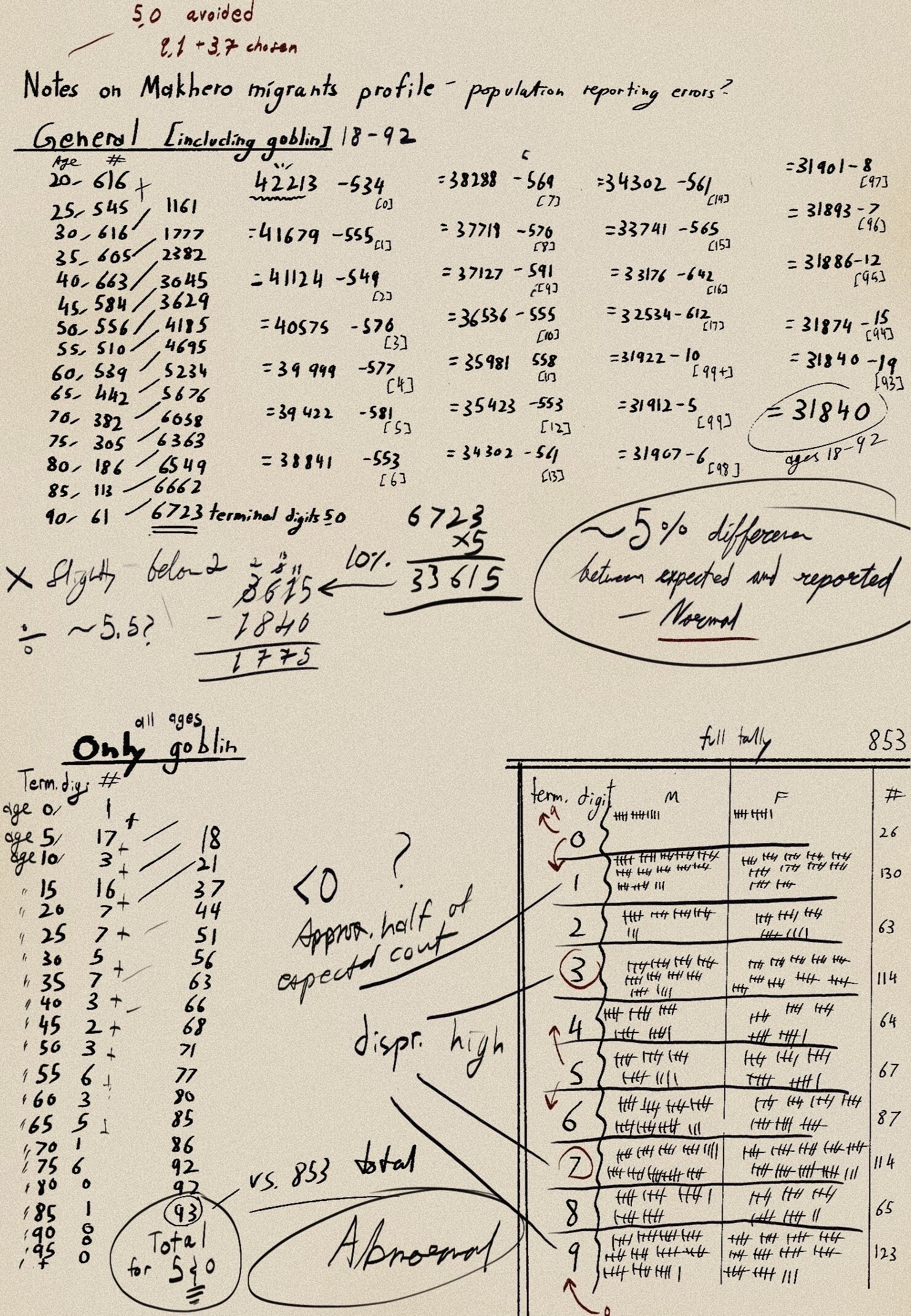
"The numbers," Csevet repeated, grimacing. "Finding them was a coincidence. We checked on a whim the age profile for migrants in the census—an old one, three years old. We saw that the ages reported in the region by goblins—apologies, what we thought at the time were goblins, as they were reporting themselves as, but were of course Celvazeize—tended to end in numbers like one and nine, seven and three. Avoiding five and zero. Usually the opposite is expected. You don’t count age the way we do, is that correct? When they had to report an age, they had to fabricate them, and in trying to be innocuous, they chose odd numbers at an unnatural frequency.”
”Ah, so even when we try to not look like we lie, it is quite apparent.”
”With management, not necessarily—but it need not be hidden at all. The emperor would welcome you all openly."
"The current one would, but we will be subject to the reigns of many more. You can spot the hesitation."
Csevet nodded, "Of course, yes.”
”You yourself have your reservations, about Voranvaru and Roya. Us too, in sooth. But if it is to be, it finds a way.”
When he took his leave, Mer Roseharad thrust into his hands a bag of herbs. "Give your grandmother more of these, but like we said—rest easy. The children, they spook easily, but she will be fine. It was only a scare. And we shall be here to help, should it happen again."
Csevet bowed gratefully.
A courier arrived at Csevet's door. Before he turned around, they had prostrated themselves at his feet. He took a step back, surprised.
"Mer Aisava," the courier said, his head facing the ground, "the honor you have done us to be able to attend upon your person."
"Avris, what art thee doing?"
He rose, sliding his hands along Csevet's sides as he did. "Mer Aisava, we are so very pleased to attend—"
Csevet laughed. "Not now!"
"Thou art so busy lately!"
"Avris."
"Okay, okay." Avris sat back, lounging in the chair across his desk. "What's toward?"
Csevet perched himself on the edge of his desk, dangling his legs beside Avris's chair. "Listen. Don't tell anyone about this favor."
He waggled his eyebrows. "Oh?"
Csevet rolled his eyes. "I need you to speak to Dachensol Habrobar for me."
"What for?"
"He has some knowledge I need to consult. But Avris, for now, no one is to know there is any business that involves this, alright?"
"I can keep a secret."
"How art thee?"
Csevet looked at him in befuddlement, and Roya looked nervous. "Generally. In Cetho, thy life, work."
How was one to explain the events of the past year? He was unsure if half of Isabon Meir knew that they had gotten a new emperor recently, much less what an imperial secretary was. "Tis well. Tis fine."
"And friends. And others. It's like thou obtained the habit of secrets years ago and now we never know…I mean…How art thee?"
Csevet smiled, and placed a hand on Roya's shoulder. "I am well. Truly."
"I suppose the Celvazeize lie because they feel unwelcome," Maia said. "We see from the reaction of the municipalities that they are fairly inflexible. But some do seem at peace in the Ethuveraz, passing as goblin, establishing themselves like Dachensol Habrobar." He sighed. "Do you feel welcome there in Makhero? Being," he raised an eyebrow, "not traditional?"
"Truly, Serenity, it is a complicated question. But it is home."
Maia traced his finger over the map. "Can we make it theirs?"